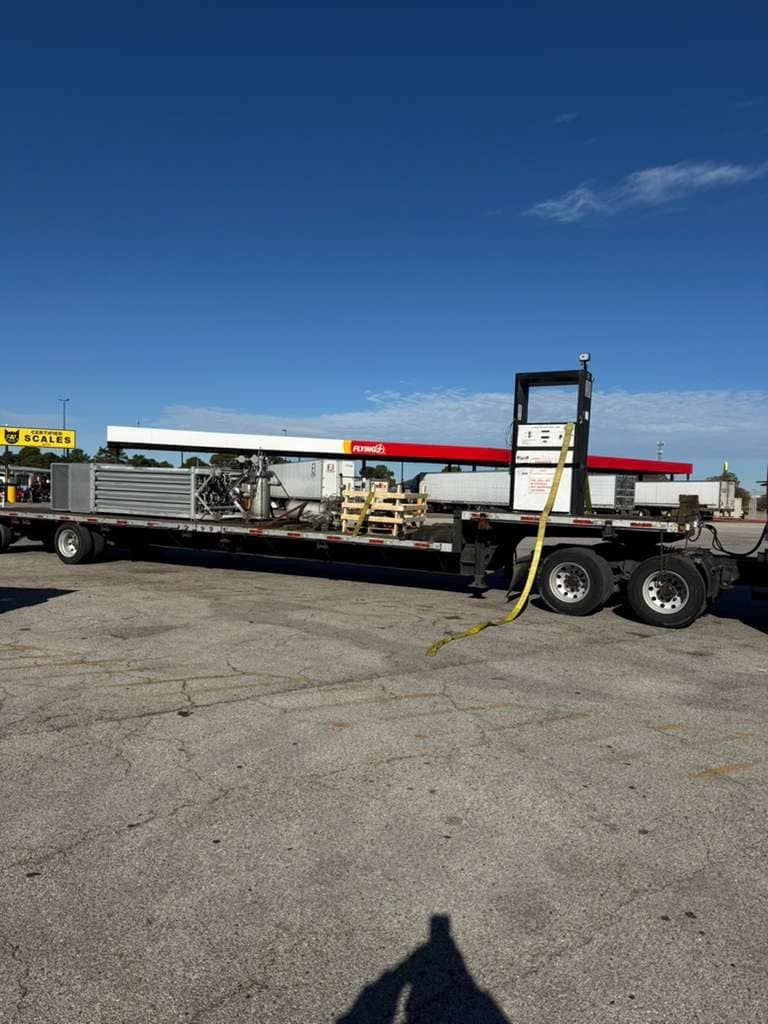
Nitrogen Tank Removal
Operational Protocol
Removal
Process
Liquid Transfer
Residual liquid nitrogen is transferred to another storage vessel or safely allowed to boil off under controlled conditions. Maximum product recovery is executed before any warming or purging sequence begins.
Warm Gas Purging
The tank and interconnected piping are systematically purged with a continuous flow of warm, dry, oil-free nitrogen gas meeting strict purity specifications — less than 1 ppmv H₂O (equivalent to a -75°C dewpoint). This warm nitrogen sweep normalizes internal cryogenic component temperatures to 295–300 K prior to any mechanical dismantling.
Atmospheric Monitoring
Continuous oxygen-deficiency sensors are deployed throughout the site for the duration of operations. Special attention is paid to confined spaces, trenches, and elevator shafts where the cold, dense nitrogen gas can initially settle — creating invisible, undetectable asphyxiation zones before dispersing.
VJP Vacuum Breaking
Vacuum Jacketed Piping (VJP) maintains an annular space evacuated to 9 microns or less. Before any mechanical disconnection, the vacuum level is verified using existing transducers, then safely broken by backfilling with dry, oil-free nitrogen through the pump-out relief port until atmospheric equilibrium is reached. Ambient air is never introduced.
Structural Dismantling & Crane Rigging
With the system fully normalized, heavy crane rigging extracts the bulk storage vessel and associated infrastructure. All operations are governed by formal lift plans to prevent thermal shock or brittle fracture. The full end-to-end project — encompassing liquid transfer, multi-day purging, vacuum breaking, and structural removal — typically spans several weeks.
Regulatory Matrix
Safety &
Compliance
NFPA 55
Compressed Gases & Cryogenic Fluids Code
NFPA 55 dictates the specific safety protocols for protecting personnel from physiological and over-pressurization hazards associated with bulk liquid nitrogen storage systems throughout the decommissioning process.
CGA P-1
Safe Handling of Compressed Gases
The Compressed Gas Association's CGA P-1 provides mandatory guidelines for the safe isolation, handling, and purging of high-pressure gas systems — the operational backbone of every nitrogen decommissioning scope.
OSHA HAZWOPER
29 CFR 1910.120
Personnel managing the decommissioning of hazardous or potentially contaminated facility footprints must operate under full HAZWOPER protocols. All field crews hold current HAZWOPER certifications before entering the operational zone.
Asphyxiation Hazard
1:694 Expansion Ratio
One liter of liquid nitrogen expands to 680–696 liters of gas at room temperature. The gas is entirely colorless, odorless, and tasteless — an uncontrolled release can rapidly displace atmospheric oxygen without any detectable warning. Continuous O₂ monitoring is non-negotiable.
PPE Requirement
All personnel in the LN₂ operational zone must wear loose-fitting heavy leather insulating gloves, full face shields over safety glasses, and footwear designed to prevent cryogenic liquids from becoming trapped against the skin. Confined space entry requires supplied-air breathing apparatus.
Our Capability
Zero Incident
Methodology
Oxygen-Deficiency Monitoring
Continuous O₂ sensors are deployed at all elevations and in all confined spaces before and throughout operations. Alarm thresholds are set well above OSHA action limits — personnel evacuation is automatic if readings drop.
VJP Vacuum Breaking Expertise
Our crews have the specialized knowledge and equipment to safely break the deep vacuum on annular jacketed piping — a procedure that is catastrophically dangerous if performed incorrectly. Ambient air is never used.
HAZWOPER-Certified Field Crews
Every technician operating in a nitrogen decommissioning zone holds current HAZWOPER certification. Written pre-job hazard analyses are completed before every operational phase.
Common Questions
FAQ
While nitrogen is non-flammable, it is an asphyxiant that displaces oxygen in enclosed or low-lying areas. A nitrogen-enriched atmosphere can cause unconsciousness and death within minutes with no warning symptoms. Our crews use continuous oxygen monitoring, forced ventilation, and buddy-system protocols whenever working near nitrogen systems.
Since nitrogen is odorless and colorless, we rely on continuous atmospheric monitoring with portable oxygen-depletion alarms carried by every crew member. Fixed area monitors are also placed at strategic locations around the work zone. Any oxygen reading below 19.5 percent triggers immediate evacuation and reassessment of ventilation procedures.
Liquid nitrogen expands to 694 times its volume when it vaporizes at ambient temperature. This means even a small quantity of residual liquid can rapidly displace breathable air in an enclosed space. This expansion ratio is a primary driver of our ventilation requirements, exclusion zone sizing, and emergency response planning.
The process begins with complete product removal followed by controlled warm-up to ambient temperature. The vacuum jacket annulus is then breached using our controlled vacuum-release procedure to prevent implosion. Once the vacuum is safely neutralized, the tank is cut and rigged for removal using standard heavy-lift equipment.
Our standard scope includes removal of all equipment, piping, supports, and foundations down to grade level. We backfill excavations with clean compacted fill, restore surface grading, and apply gravel or seed as specified. Final documentation includes a site clearance report with photographs confirming the area is ready for its next use.
More Capabilities