Zero Incident Standard
Safety Culture
Zero Incident
Protocols
Decommissioning HAZOP
Before a single valve is touched, our process engineers conduct a full Hazard and Operability Study (HAZOP) scoped specifically for dismantling — not construction. Aging infrastructure suffers from corrosion, lost schematics, and structural fatigue. The HAZOP identifies catastrophic failure points: unrecognized trapped pressure pockets in cryogenic valves, structural collapse risks during heavy lifts, and unanticipated gas migration pathways — all documented and mitigated before crews arrive on site.
Job Safety Analysis + LOTO
Every day begins with a mandatory Job Safety Analysis (JSA) where work crews break down specific tasks — rigging an LNG vaporizer, severing a CNG supply line, hot-tapping a process header — identify localized hazards (shifting center of gravity, pinch points, static electricity generation), and establish task-specific mitigation strategies. This is coupled with strict LOTO (Lockout/Tagout) per OSHA 29 CFR 1910.147: physical padlocks, multi-worker hasps, and visual warning tags ensure zero pneumatic, hydraulic, or electrical energy can reach the work zone.
Stop Work Authority
The most vital behavioral protocol on any IGTR project is universal Stop Work Authority (SWA). Every employee — from the newest laborer to the senior project engineer — holds the absolute mandate and professional obligation to halt operations immediately upon detecting any unsafe condition: a localized drop in oxygen levels, an unexpected pressure gauge reading, a frayed rigging strap, or a ground condition change. No disciplinary action can result from executing an SWA. Safety completely overrides scheduling pressure.
Continuous Atmospheric Monitoring
ATEX-rated multi-gas monitors are stationed throughout the work zone and worn as personal equipment by all crew members. They continuously measure Lower Explosive Limit (LEL), oxygen concentration, H2S, and CO. No cutting, grinding, or torch operation commences until 0% LEL is confirmed throughout the vessel and surrounding atmosphere. Readings are logged automatically and become part of the final closure documentation package.
Compliance Matrix
Governing
Bodies
OSHA
29 CFR 1910.120 & .147
HAZWOPER mandates that all personnel handling industrial gas residues, contaminated soils, and chemical absorbents hold formal training and annual medical surveillance. LOTO (29 CFR 1910.147) is non-negotiable — physical isolation and locking of all energy sources before any dismantling begins. No exceptions, no variances.
EPA
RCRA & CERCLA
All removed hazardous materials — degraded compressor lubricants, PCB-contaminated soils, chemical solvents — are characterized, manifested, transported, and disposed of under strict RCRA guidelines. Facility closure requires formal plans signed by an independent PE, detailed site remediation reports, and EPA generator ID numbers tracking every waste manifest.
DOT / PHMSA
49 CFR Parts 171–180
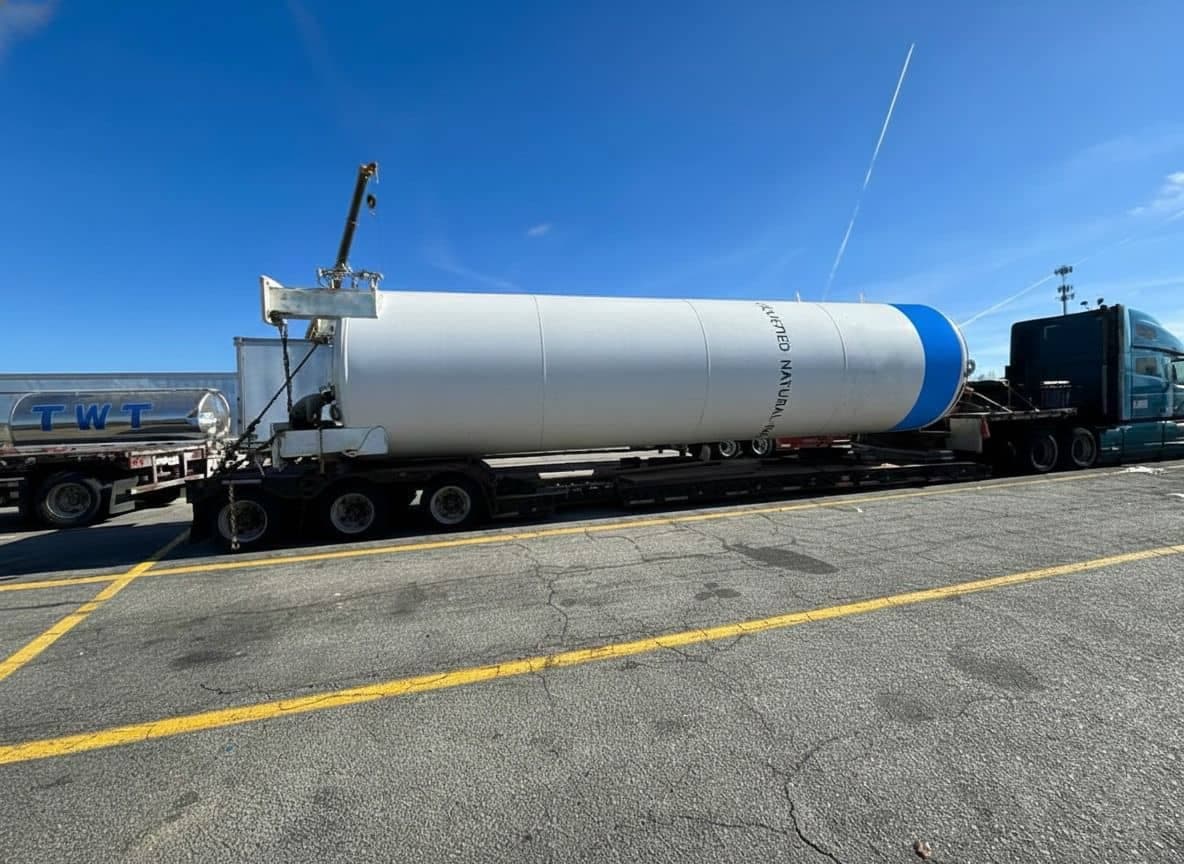
Physical transport of decommissioned tanks, residual hazardous fluids, and high-pressure cylinders on public roadways falls under DOT jurisdiction. Any vessel transported with residual pressure or product requires properly placarded multi-axle trailers, completed hazardous materials manifests, and vetted routing to avoid densely populated areas and structurally deficient bridges.
NFPA 59A & 52
LNG Purging & CNG Destruction
NFPA 59A dictates the precise engineering requirements for LNG tank closure — liquid impoundment, thermal radiation protection, and exact multi-day purging procedures required before a tank can be taken out of service. NFPA 52 governs the specific end-of-life destruction, defueling parameters, and leak testing required for high-pressure CNG cylinders and compression networks.
EPA GHGRP
The EPA actively monitors greenhouse gas emissions under the Greenhouse Gas Reporting Program (GHGRP), requiring controlled management of methane venting during all pipeline and tank blowdowns. IGTR engages vapor-recovery units and closed-loop flare systems to limit CO₂-equivalent atmospheric impact — a regulatory requirement that also protects clients from post-closure emissions liability.
Personnel Qualifications
Certified
Field Crews
CHMM
Certified Hazardous Materials Manager
Management-level personnel hold the CHMM designation — expert-level mastery of EPA and DOT regulations governing hazardous waste classification, emergency response, and site remediation management.
CSP
Certified Safety Professional
Site safety officers and project leads hold the CSP credential, demonstrating global mastery in hazard identification, safety auditing, and complex risk management across process industries.
HAZWOPER
40-Hour + Annual 8-Hour Refresher
All field personnel maintain OSHA 40-Hour HAZWOPER certification, enabling operation within contamination zones. Supervisors hold an additional 8 hours of management-level training. Annual 8-hour refreshers are mandatory.
PERMITS
Daily Hot-Work & Confined-Space Entry
Hot-work and confined-space entry permits are issued and revoked daily by the site safety manager based on continuous atmospheric testing — never pre-signed for convenience. Permit records become part of the final closure package.