Decommissioning Services
Decommissioning
Operational Scopes
We perform specialized removals tailored to the exact constraints of your site — hazard neutralization, precision dismantling, and strict regulatory compliance, handled end to end.
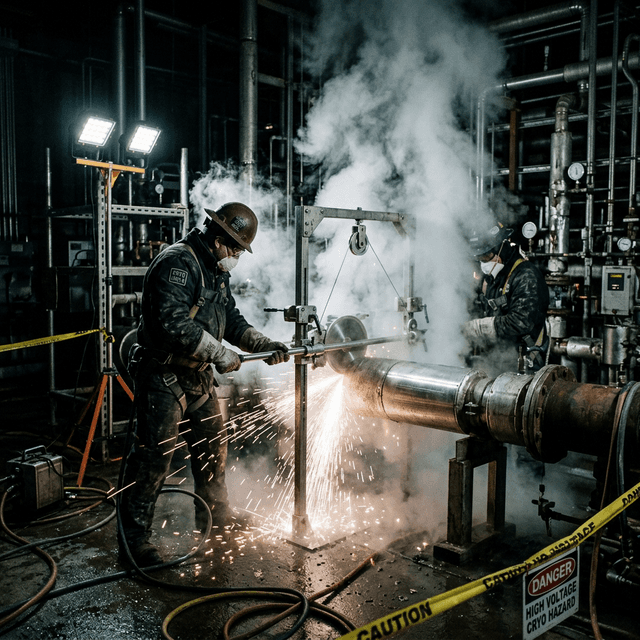
LNG Tank Removal
Cryogenic temperatures (-161°C), flammable methane vapor clouds, specific thermal shock risks.
Nitrogen vaporization rigs, ATEX continuous gas monitors, cold-cutting diamond wire saws.
CNG Station Decommissioning
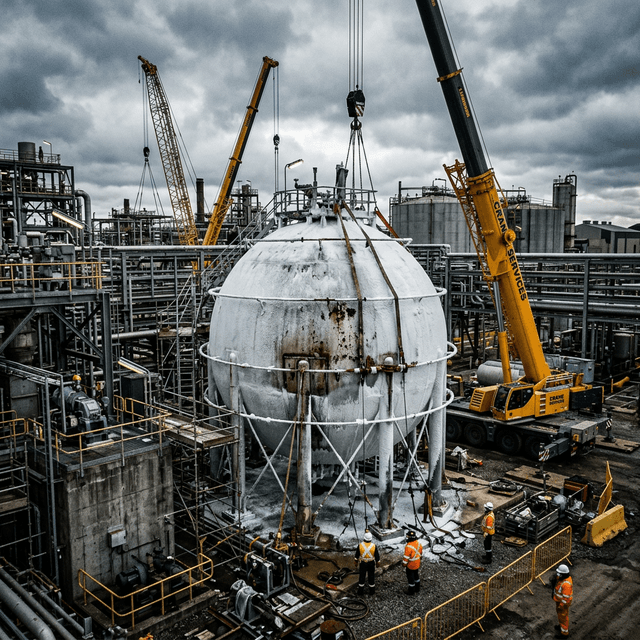
Extreme kinetic energy (3,000-4,300 psi), explosive decompression, cylinder fatigue (NFPA 52).
Pressure-reducing manifolds, non-sparking beryllium copper tools, pneumatic torque wrenches.
Nitrogen Tank Removal
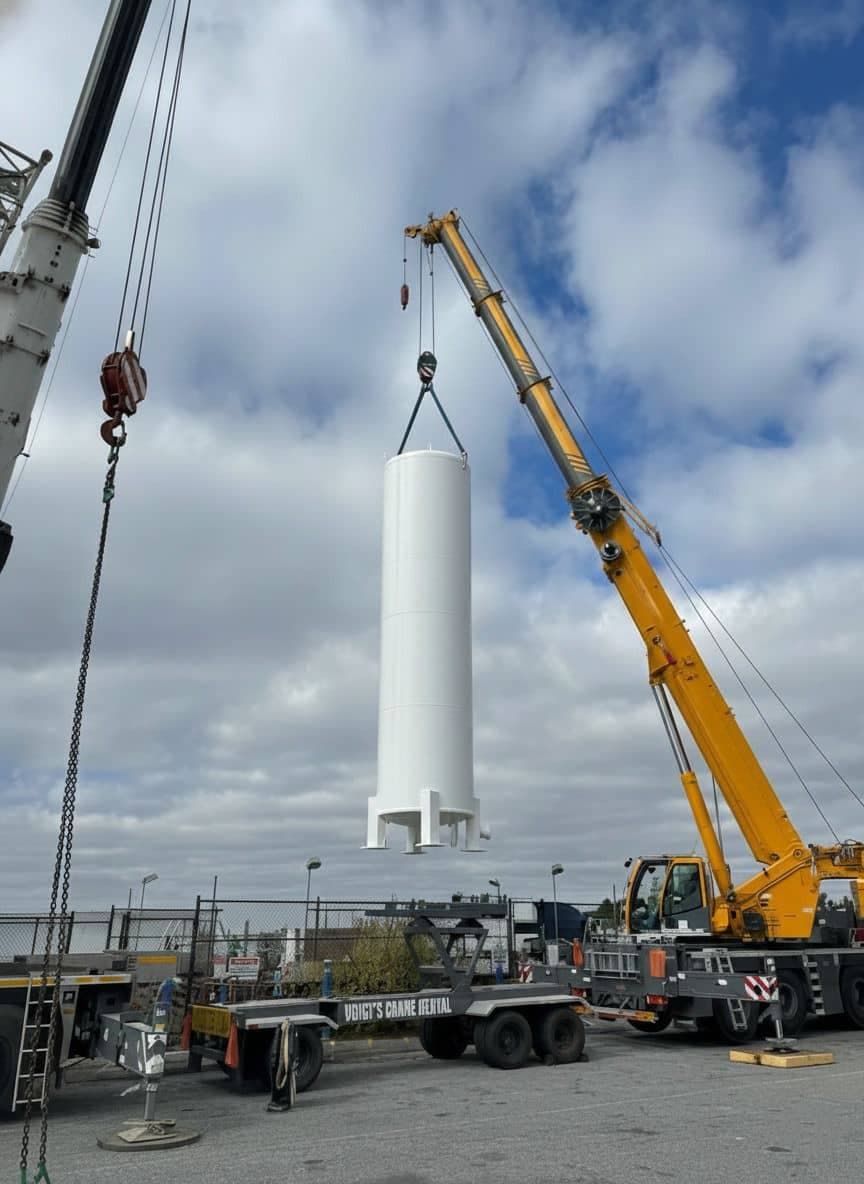
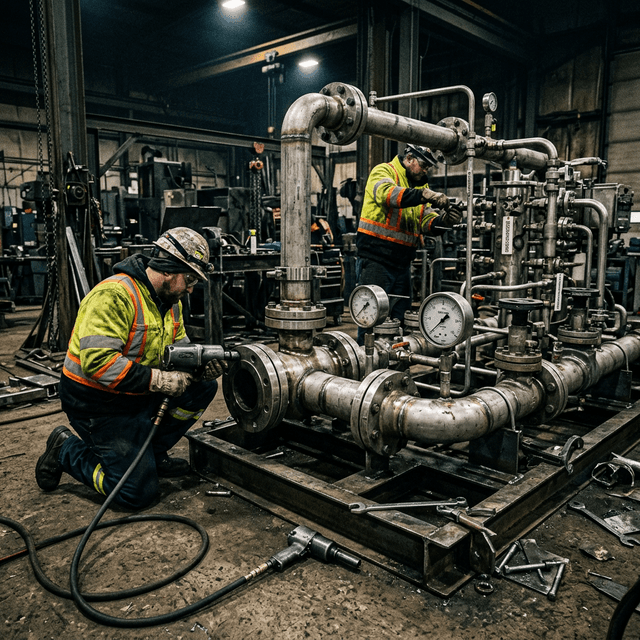
Severe asphyxiation risk, invisible/odorless, 1:694 expansion ratio, extreme cold (-196°C).
Oxygen-deficiency monitors, low-temperature transfer hoses, vacuum-insulated pipe shears.
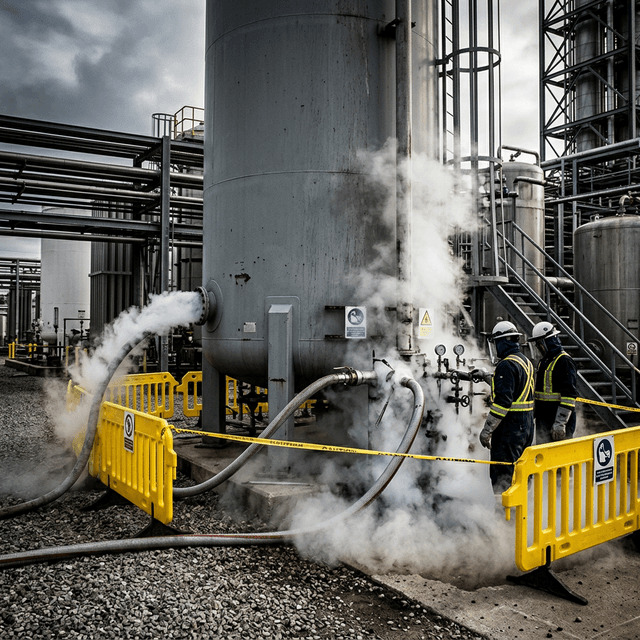
Oxygen Tank Removal
Combustion catalysis, extreme oxidizer, LOX spills, hydrocarbon ignition risks.
Anti-static gear, continuous oxygen enrichment monitors, hydrocarbon-free tooling.
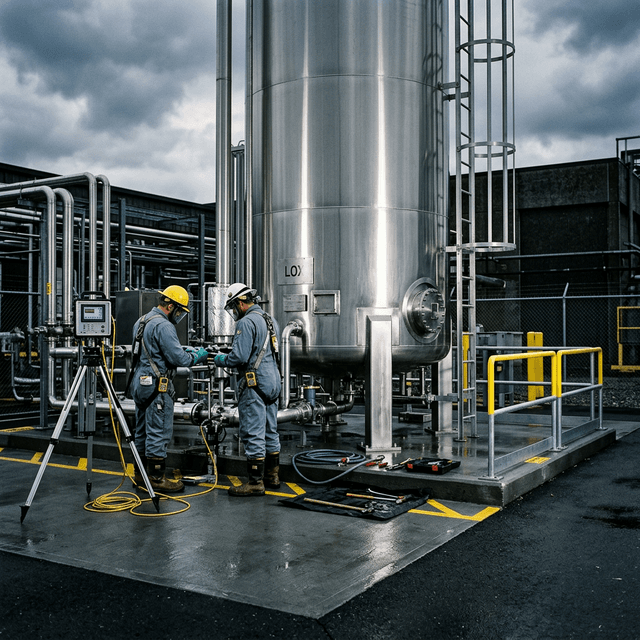
Cryogenic Systems
1:700 volumetric expansion ratios, severe asphyxiation risks, and deep vacuum jacket implosion risk.
Oxygen-deficiency monitors, low-temperature transfer hoses (-196°C), vacuum-insulated pipe shears.
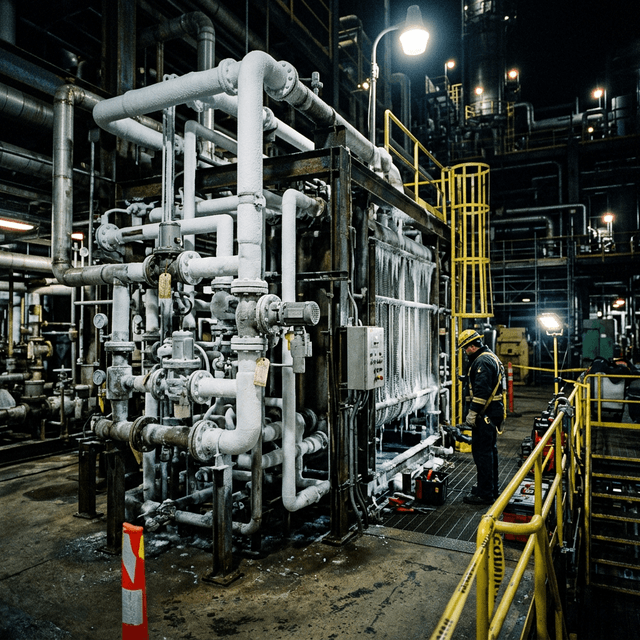
Compression Station Removal
Intersection of 4160V heavy electrical switchgear with extreme-pressure hydrocarbon pneumatics.
Industrial vacuum trucks, 4160V isolation testing gear, heavy hydraulic excavators.
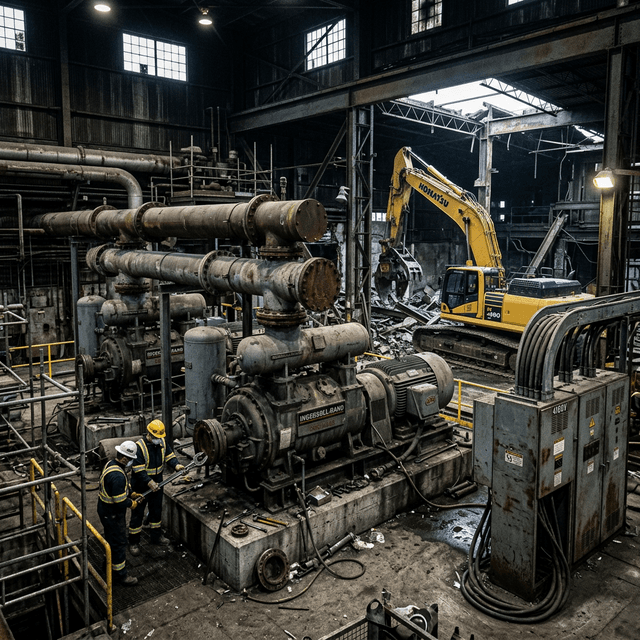
CNG Storage Tank Removal
Extreme stored pressure (3,600–4,500 psi), projectile risk from cylinder failure, residual flammable methane inventory.
Calibrated pressure-reducing bleed manifolds, non-sparking beryllium copper tools, hydrocarbon gas detection arrays.
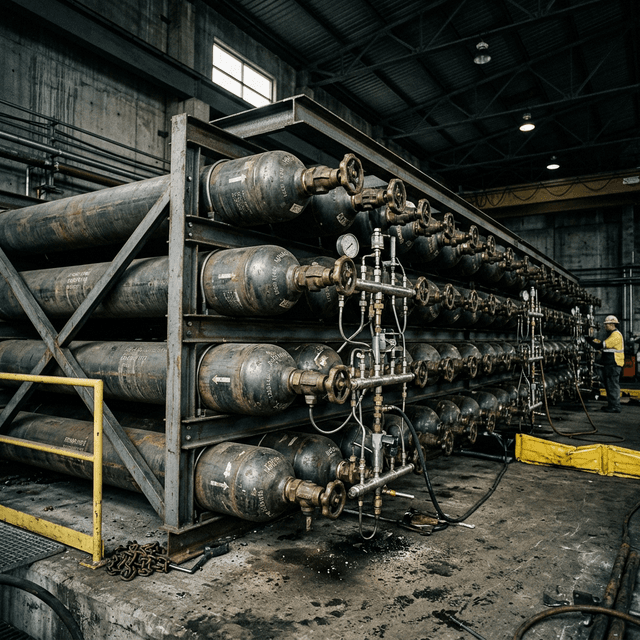
Cryogenic System Decommissioning
Vacuum-jacket implosion on pipe severance, O2-enriched atmosphere, flash vaporization in heat exchanger cores.
Inert gas purge systems, vacuum-insulated pipe shears, continuous O2 deficiency and enrichment monitors.