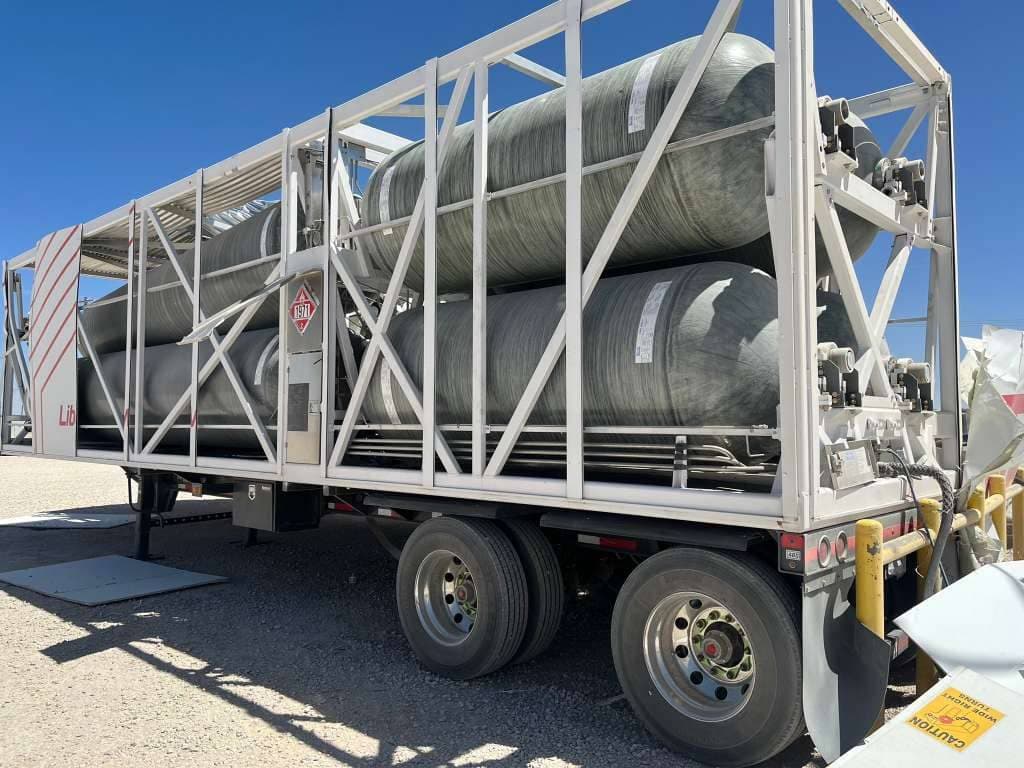
LNG Tank Removal
Operational Protocol
Removal
Process
Liquid Evacuation
Residual LNG is pumped out using submersible protocols to an active storage tank or a tanker truck. Maximum product recovery is achieved before any warming procedure begins.
Vaporizing the Heel
Any remaining liquid 'heel' that cannot be pumped out is safely vaporized by introducing warm, dry natural gas or nitrogen into the tank. This prevents super-cooling of residual product, which can cause brittle fracture in the tank's steel.
Controlled Warming
The tank is slowly warmed to ambient temperatures by introducing warm gas at the bottom and venting effluent from the top. Heating rate is strictly controlled to prevent exceeding design pressure and to avoid excessive thermal gradients that could damage the tank bottom.
Nitrogen Purging
The tank is physically disconnected from all gas sources and continuously purged with inert nitrogen gas until safe atmospheric levels are achieved — verified at 0% LEL (Lower Explosive Limit) throughout.
Structural Dismantling
With the tank fully inerted, dismantling begins at the center of the roof and works outward, removing roof plates segment by segment. Cold-cutting diamond wire saws are used exclusively to eliminate all risk of incendiary sparks near residual hydrocarbon traces.
Regulatory Matrix
Safety &
Compliance
NFPA 59A
Purging Principles
Tanks taken out of service are purged in strict accordance with NFPA 59A's established Purging Principles and Practices. All gauge openings, connecting lines, and piping are capped, plugged, or completely disconnected.
Documentation
Closure Stenciling
Regulatory compliance mandates that aboveground storage tanks be vented to atmosphere and stenciled with the specific date of closure — creating a permanent, auditable record of decommissioning.
Perlite Management
Environmental Extraction
The annular space of double-walled LNG tanks is filled with expanded perlite powder — lightweight, airborne, and a respiratory hazard. Specialized vacuum trucks extract it into containment bags; samples are tested for hydrocarbon contamination before disposal routing.
Critical Lift Plan
100-Ton Crane Operations
Heavy steel structures are removed under a formalized critical lift plan using 100-ton capacity cranes with spreader bars, slings, and shackles. A dedicated rigging supervisor ensures all operations halt during excessive wind speeds.
PPE Requirement
All personnel operating in the LNG decommissioning zone must wear cryogenic gloves, full face shields over safety glasses, and full-coverage coveralls rated for cryogenic exposure. No exceptions.
Our Capability
Precision at
Every Stage
Cryogenic-Rated Equipment
Nitrogen vaporization rigs, ATEX-rated continuous gas monitors, and cold-cutting diamond wire saw systems purpose-built for LNG environments.
Multi-Day Purging Protocols
Controlled warming and continuous nitrogen purging spans multiple days. We do not cut corners on timeline — the process is complete only when 0% LEL is confirmed.
Zero Incident Philosophy
Every operational step is governed by written procedures, pre-job hazard analyses, and daily toolbox talks. Our field crews maintain an unblemished safety record across all LNG removals.
Common Questions
FAQ
Most LNG decommissioning projects take 2 to 6 weeks depending on tank size, site complexity, and permitting timelines. The controlled warming process alone can take several days since LNG must be gradually brought from cryogenic temperatures to ambient conditions. We develop a detailed project schedule during the initial site assessment so you know exactly what to expect.
We use controlled vaporization and flaring procedures to safely manage any remaining LNG before tank removal begins. All residual product is accounted for, and venting is performed in strict compliance with EPA and state air-quality regulations. In some cases we can transfer usable product to another facility, reducing waste and offsetting project costs.
Yes, in most cases adjacent operations can continue with proper safety zoning. We establish exclusion zones, continuous gas monitoring, and fire-watch protocols to protect personnel and nearby equipment. Our team coordinates closely with your operations staff to minimize disruption while maintaining full regulatory compliance.
LNG decommissioning is governed by NFPA 59A, DOT pipeline safety regulations, and state-level environmental permits. We handle all permit applications, agency notifications, and compliance documentation on your behalf. Our team stays current on evolving federal and state requirements so you can focus on your core business.
Many LNG components retain significant resale value, including vaporizers, pumps, transfer piping, and instrumentation. Our asset recovery program evaluates every piece of equipment and connects you with qualified buyers in the secondary market. Clients typically recover 15 to 40 percent of their project costs through equipment resale.
More Capabilities