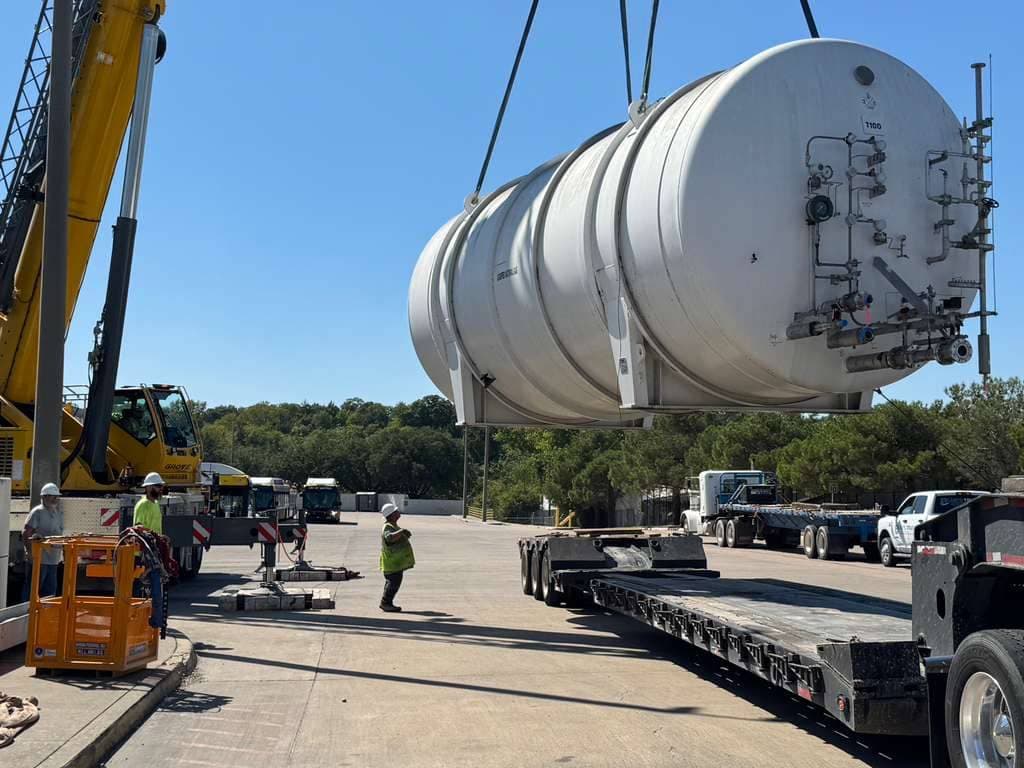
Compression Station Removal
Operational Protocol
Removal
Process
High-Voltage LOTO
Per OSHA 1910.147, technicians don high-voltage PPE — insulated gloves, non-conductive footwear, and insulated standing mats — before throwing the main UL 98 safety disconnect switches. Even after disconnection, heavy compressor drive systems and associated inverters retain lethal charges in capacitors. A mandatory 5–15 minute passive discharge period is observed, followed by voltmeter verification that all readings have dropped below 50 volts before physical padlocks and visible tags are applied.
Controlled Blowdown
The main natural gas supply is mechanically isolated via block valves and blind flanges. Residual high-pressure gas is systematically vented through an elevated stack, managing the Joule-Thomson cooling effect that can freeze and shatter valves during rapid release. Gas is naturally present in bypasses, vent piping, and interstage coolers — all are systematically identified and addressed.
Sequential Nitrogen Purging
With the system depressurized, continuous nitrogen purging displaces all combustible hydrocarbons. Purging is executed sequentially — starting with the largest branch systems and pushing through to the extremities — maintaining a minimum purge velocity to prevent dangerous gas stratification in low points. Continuous LEL monitors verify 0% Lower Explosive Limit before any mechanical dismantling begins.
Fluid Extraction & Chemical Cleaning
Industrial vacuum trucks are deployed to drain and extract used crankcase oil, hydraulic fluids, synthetic gearbox lubricants, and glycol coolants from all reservoir and piping systems. Internal reservoirs and piping networks then undergo high-velocity lube oil flushing and chemical retro-jetting to completely eliminate hazardous sludge and residual hydrocarbons before structural deconstruction.
Environmental Remediation
Aging compressor stations frequently suffer from historic micro-leaks. Environmental engineers conduct extensive subsurface soil sampling and groundwater testing beneath all compressor pads and piping runs. Any contaminated soil or fill material is excavated and transported to an EPA-certified Treatment, Storage, and Disposal Facility (TSDF) under proper waste manifesting.
Cold-Cutting & Structural Removal
Heavy stainless steel process piping is severed using cold-cutting tools — clamshell pipe cutters, abrasive water jet machines, and diamond wire saws. These eliminate all spark generation and prevent metallurgical changes from heat-affected zones. Acoustic compressor buildings and weather enclosures are dismantled using hydraulic excavators with shears. Multi-ton compressor blocks and engines are rigged using heavy-duty overhead cranes or high-capacity gantries, unbolted from concrete foundations, and loaded onto multi-axle trailers.
Regulatory Matrix
Safety &
Compliance
OSHA 1910.147
Lockout/Tagout Standard
The Control of Hazardous Energy standard governs all electrical isolation procedures on 480V–4,160V compression systems. Zero Energy State must be verified by a qualified electrician before any physical contact with electrical components.
Zero Energy State
Capacitor Discharge Protocol
Capacitors in heavy compressor drive systems retain a lethal charge after main disconnect. A mandatory 5–15 minute passive discharge period is strictly enforced, followed by voltmeter verification below 50V at battery pack terminals, motor leads, and contactors.
LEL Monitoring
0% Explosive Limit Verification
Continuous atmospheric monitors verify that the Lower Explosive Limit has reached 0% before any mechanical dismantling begins. Gas stratification in low points and interstage coolers is addressed through sequential purging at minimum purge velocity throughout the system.
EPA TSDF
Hazardous Fluid Disposal
All extracted hazardous fluids — crankcase oil, hydraulic fluid, synthetic lubricants, and glycol coolants — are manifested and transported to EPA-certified Treatment, Storage, and Disposal Facilities under proper hazardous waste manifesting regulations.
Dual-Hazard Intersection
Compression station decommissioning presents a unique dual hazard: 4,160V heavy electrical switchgear operating in the same physical space as extreme-pressure hydrocarbon pneumatics. Both hazard classes must be fully neutralized and independently verified before structural work begins. Neither can be managed in isolation.
Our Capability
High-Voltage
& High-Pressure
Dual-Discipline Field Crews
Our teams are trained in both high-voltage electrical isolation and high-pressure gas pneumatics — the only combination that safely addresses the dual hazard intersection present at every compression station.
Industrial Vacuum Fluid Extraction
Heavy-duty vacuum trucks extract all hazardous compressor fluids before demolition — crankcase oil, hydraulic fluid, synthetic gearbox lubricants, and glycol coolants — preventing ground contamination and environmental liability.
Cold-Cutting Structural Dismantlement
All process piping is severed using clamshell cutters, abrasive water jets, or diamond wire saws. No heat-affected zones, no spark generation — the only safe methodology in post-blowdown compressor environments.
Common Questions
FAQ
All electrical systems are de-energized and locked out/tagged out (LOTO) per OSHA 29 CFR 1910.147 before any mechanical work begins. Our electricians verify zero-energy state with calibrated test equipment at each disconnect point. High-voltage components such as VFDs, transformers, and motor control centers are removed by licensed electricians with arc-flash training.
Compressor systems contain lubricating oils, hydraulic fluids, and coolants that can contaminate soil and groundwater if not properly managed. We extract and containerize all fluids before equipment removal and inspect the pad area for staining or soil contamination. If contamination is found, we can perform soil sampling and coordinate remediation services.
Single-unit compressor removals typically take 1 to 2 weeks, while multi-unit stations with extensive piping and electrical infrastructure may require 4 to 8 weeks. Timeline depends on equipment size, site access, fluid volumes, and whether soil remediation is needed. We provide a firm schedule after completing the initial site assessment.
We drain all lubricating oil, hydraulic fluid, coolant, and condensate into DOT-approved containers using vacuum extraction equipment. Each fluid stream is segregated, labeled, and manifested for transport to licensed disposal or recycling facilities. Disposal documentation is included in the final project closeout package for your environmental records.
Basic soil inspection is included in every project. If we discover contamination from fluid leaks or spills, we can provide soil sampling, laboratory analysis, and remediation services as an add-on scope. We work with certified environmental consultants to develop a remediation plan that meets state regulatory requirements and supports property closure.
More Capabilities