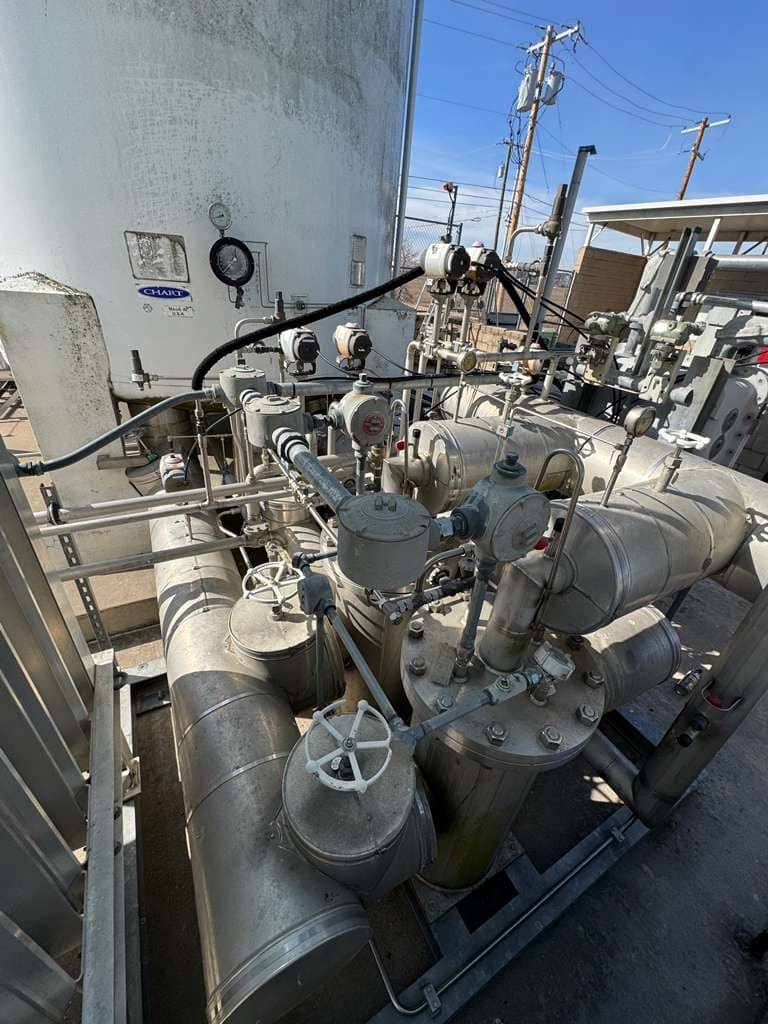
CNG Storage Tank Removal
Operational Protocol
Removal
Process
Cylinder Classification
Each cylinder is classified by structural type before defueling begins: Type 1 (all-metal steel or aluminum), Type 2 (metal liner with hoop-wrapped composite center), Type 3 (thin metal liner with fully wrapped composite), or Type 4 (non-metallic plastic liner with full composite wrap). Type 4 cylinders require strict adherence to manufacturer-specified flow rates during defueling — rapid depressurization can cause the plastic liner to blister, collapse, or fail structurally.
Controlled Venting
Gas is vented through calibrated pressure-reducing bleed manifolds at a controlled rate — typically 1 cubic foot per minute — and discharged at a minimum of 15 feet above ground to ensure safe atmospheric dispersion without creating a flammable ground-level methane cloud. The Joule-Thomson cooling effect is managed throughout to prevent valve freezing.
Nitrogen Purge
After depressurization, each cylinder is thoroughly purged with inert nitrogen to displace all residual combustible methane. Purging is confirmed by continuous hydrocarbon gas detection array readings before any mechanical disconnection work begins.
Dismantling with Non-Sparking Tools
All valve disconnections, fitting removals, and cylinder appurtenance work is performed exclusively with non-sparking, non-magnetic hand tools — aluminum bronze or beryllium copper alloy only. For structural steel and heavy piping severance, cold-cutting technologies (clamshell pipe cutters, abrasive water jets) are used — no sparks, no heat-affected zones.
EOL Cylinder Destruction
No recertification path exists for CNG cylinders that have reached their manufacturer-defined expiration date (15, 20, or 25 years). Cylinders exhibiting Level 3 damage — severe gouges, material loss, structural fatigue, or heat exposure — are immediately condemned. Destroyed cylinders are drilled completely through the cylinder wall and internal liner, or sectioned with saws, rendering them permanently incapable of holding pressure before scrap or recycling.
Material Disposition
Structurally sound, non-expired cylinders and components are assessed for asset recovery and potential resale, directly offsetting project costs. Permanently destroyed EOL cylinders, degraded piping, and drained hazardous fluids are manifested and transported to certified recycling or hazardous waste disposal facilities under appropriate waste documentation.
Regulatory Matrix
Safety &
Compliance
NFPA 52
Vehicular Gaseous Fuel Systems Code
NFPA 52 explicitly mandates that CNG cylinders reaching their expiration date or condemned by inspection be permanently removed from service and destroyed. It also requires decommissioning facilities to maintain strict written procedures for defueling and tank handling.
CSA EXP 2.1
Premier Decommissioning Standard
The CSA Group's EXP 2.1 is the recognized premier industry best practice document. It provides comprehensive, step-by-step guidance on defueling, purging, decommissioning, and safe disposal of end-of-life CNG containers — the operational bible for all cylinder removals.
ANSI NGV 2
Manufacturing & Inspection Standards
ANSI NGV 2 and FMVSS 304 (49 CFR 571.304) dictate original manufacturing specifications and mandate periodic visual inspections — typically every 36 months or 36,000 miles, or after any accident. Inspection findings determine whether premature decommissioning is required.
No Recertification
End-of-Life is Final
There is currently no authorized or safe method to requalify or recertify CNG cylinders for extended use once they have reached their labeled expiration date. Destruction is the only compliant path — there are no exceptions.
Projectile Risk — Level 3 Damage Condemnation
Cylinders exhibiting Level 3 damage — severe gouges, material loss, structural fatigue, or heat exposure — must be immediately condemned and removed from service. A structurally compromised CNG cylinder at 3,600–4,500 psi represents an extreme projectile risk. Our pre-removal inspection protocol identifies and segregates condemned cylinders before any defueling begins.
Our Capability
Every Cylinder
Type. Every Stage.
Type 4 Cylinder Expertise
Plastic-liner Type 4 cylinders require manufacturer-specified defueling flow rates to prevent liner collapse. Our crews are trained on type-specific protocols and consult manufacturer documentation before any defueling begins.
Compliant EOL Destruction
All end-of-life cylinders are permanently destroyed on-site — drilled through the wall and liner or sectioned — before any material leaves the site. This ensures no expired cylinder enters the secondary market.
Asset Recovery Program
Non-expired, structurally sound cylinders and components are assessed for resale value, directly reducing the total cost of your decommissioning project before work begins.
Common Questions
FAQ
Type 1 cylinders are all-steel construction, Type 2 uses a steel liner with composite wrap on the cylindrical section, Type 3 has a metal liner fully wrapped in composite, and Type 4 uses a plastic liner fully wrapped in composite. Each type requires different handling procedures during decommissioning due to variations in weight, pressure rating, and material behavior.
Expired cylinders are first fully depressurized using controlled blowdown procedures, then rendered permanently unusable by cutting or crushing per DOT requirements. Composite-wrapped cylinders require special cutting protocols to manage fiber release. All materials are documented and sent to certified recycling facilities.
We use engineered blowdown systems with flow-limiting orifices that control the rate of pressure release to prevent rapid temperature changes and material stress. The process is monitored continuously with calibrated pressure gauges and gas detectors. Our technicians follow strict lockout/tagout procedures throughout depressurization.
We provide a complete documentation package including cylinder inventory with serial numbers, inspection results, depressurization certificates, disposal or resale records, and a final site clearance report. This documentation satisfies DOT, OSHA, and state regulatory requirements and supports property transfer or lease termination.
CNG is a flammable gas, and even residual amounts can create an ignitable atmosphere during decommissioning. Non-sparking tools made from beryllium copper or aluminum bronze eliminate a potential ignition source. Our crews are equipped exclusively with certified non-sparking tools and continuously monitor the work area with combustible gas detectors.
More Capabilities