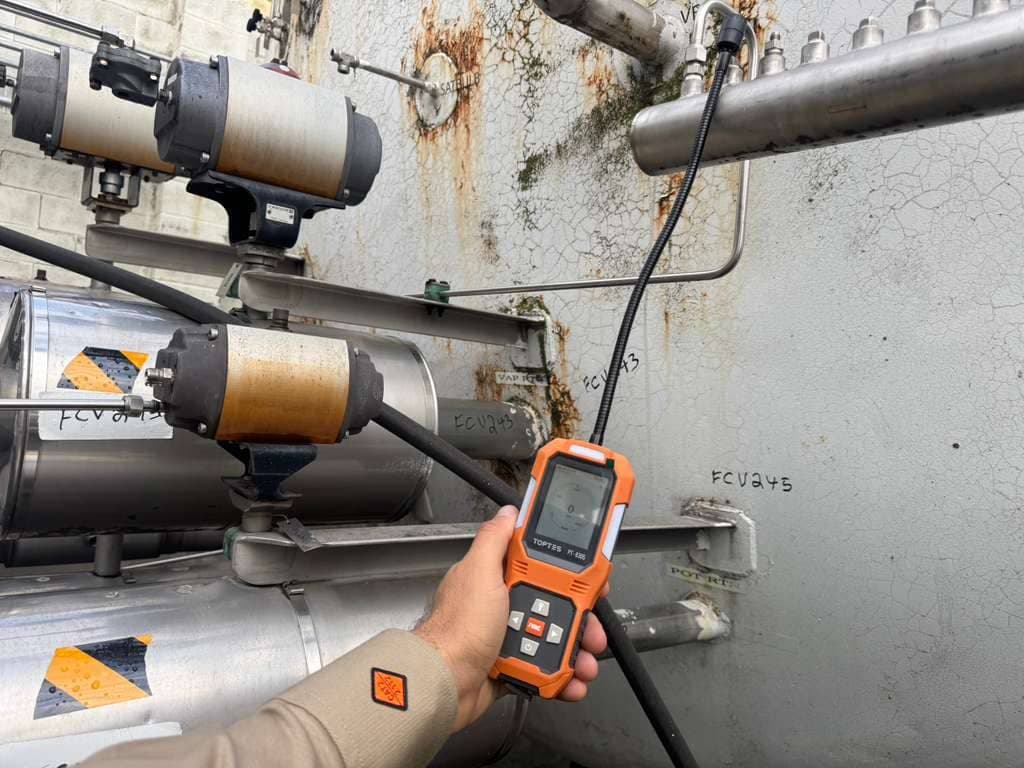
EPA Compliance: Managing GHGRP Methane Venting
EPA Compliance: Managing GHGRP Methane Venting
Decommissioning an LNG or CNG facility is not a purely mechanical undertaking. Federal methane reporting obligations can kick in the moment you open a valve — and the regulatory window for correct reporting is measured in calendar days, not weeks.
What Is GHGRP and Who Does It Apply To?
The EPA's Greenhouse Gas Reporting Program (GHGRP), established under 40 CFR Part 98, requires facilities that emit 25,000 metric tons or more of CO₂ equivalent (CO₂e) per year to report their greenhouse gas emissions. For natural gas operations, this includes methane venting from decommissioning events — specifically controlled and uncontrolled blowdowns from storage vessels, piping, and processing equipment.
Even facilities that do not normally meet reporting thresholds can trigger GHGRP obligations during a decommissioning event if a large methane release pushes annual emissions over the threshold. A 30,000-gallon LNG tank blowdown, depending on residual product volume and methane concentration, can represent a significant single-event emission.
Controlled vs. Uncontrolled Blowdowns
GHGRP differentiates between controlled blowdowns — planned, to a flare or enclosed combustion device — and uncontrolled blowdowns (direct atmospheric venting). Controlled blowdowns carry substantially lower CO₂e credits under the regulations and are therefore preferred from a compliance standpoint, even when temporary flare equipment adds capital cost to the scope.
For LNG-specific decommissioning, the vaporization and controlled atmospheric release of residual product after initial venting is classified differently from a pressurized line blowdown. Your compliance pathway depends on vessel type, gas composition, remaining product volume, and available containment infrastructure — all factors that must be assessed before operations begin.
Reporting Timeline and Documentation Requirements
Covered facilities must submit annual GHGRP reports to EPA's electronic Greenhouse Gas Reporting Tool (e-GGRT) by March 31 for the preceding calendar year. However, decommissioning events that generate significant one-time emissions should be documented contemporaneously. Real-time logging of venting duration, estimated flow rates, gas composition sampling, and atmospheric conditions is critical for accurate reporting and audit defense.
“Regulators don't penalize well-documented decommissioning events. They penalize poorly-documented ones.”
— IGTR Compliance Team
Minimum Documentation for Decommissioning Venting Events:
- Vessel serial number, capacity, gas type, and pressure at time of blowdown
- Start and end timestamps for each venting or purging operation
- Ambient atmospheric conditions (wind speed, direction, temperature)
- Estimated or metered release volume and methane concentration
- Name and credential of the Responsible Party certifying the report
State-Level Regulations Add Complexity
Many states have adopted more stringent methane rules than federal GHGRP minimums — particularly California (CARB), Colorado (CDPHE Rule 7), and New York. Decommissioning projects in these jurisdictions may require pre-notification to the state environmental agency, approval of a site-specific venting plan, or third-party verification of reported emissions.
Our compliance team maps federal and state requirements for every project during the initial scoping phase, so there are no regulatory surprises on day one of field operations. A decommissioning event with full regulatory support from the start is almost always cheaper and faster than one that encounters compliance issues mid-scope.
Article Details
Category
Regulatory
Published
March 02, 2026
Read Time
7 min read
Topic
Decommissioning
Field Operations
Zero-Spark Cutting Protocol
Discuss Your Project
Our compliance team is available to assess your facility and scope a fixed-price proposal.
Contact Our TeamRelated Pages
Next Step
Ready to
Discuss Your Project?
Our compliance team is standing by to assess your facility and deliver a fixed-scope proposal with asset recovery credits applied.